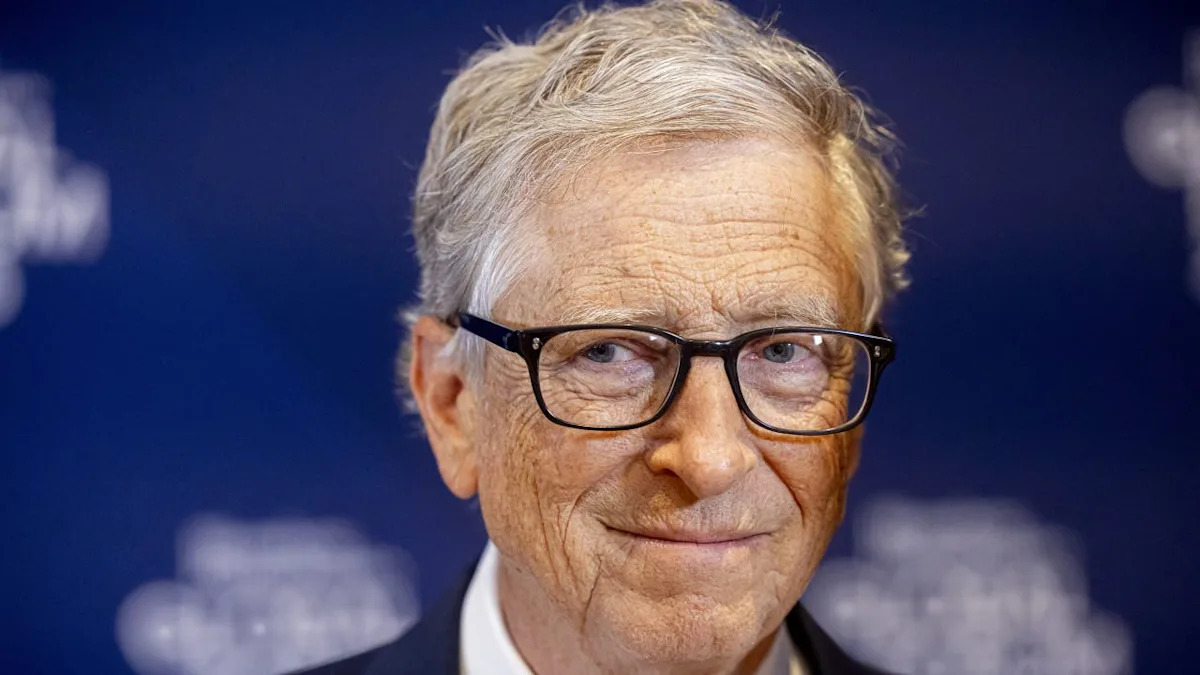
Microsoft co-founder and global philanthropist Bill Gates has consistently found himself in the uncomfortable spotlight, particularly during interviews concerning his controversial association with the late financier and convicted sex offender, Jeffrey Epstein. These Epstein Connection: How It Tarnished Bill Gates' Public Image have become a recurring theme in his public appearances, often characterized by discernible nervousness and a defensive posture, leaving a lingering stain on his meticulously cultivated public image.
The Uncomfortable Spotlight: Bill Gates and Jeffrey Epstein
Jeffrey Epstein, a figure who moved in the highest echelons of society, was not merely a wealthy financier; he was a convicted underage human trafficker. His legal troubles, convictions, and subsequent federal detention awaiting trial for similar offenses cast a long, dark shadow. The internet is awash with images of Epstein alongside numerous prominent individuals, underscoring his extensive network. However, for Bill Gates, his admitted "dinners" and association with Epstein, especially after the latter's initial legal troubles, have proven to be a particularly vexing problem.
The timeline of Gates's meetings with Epstein is a critical point of contention. Unlike some public figures, such as Donald Trump, who reportedly dismissed Epstein from their circles before his conviction, Bill Gates's encounters are said to have occurred five years *after* Epstein first faced legal issues. This distinction amplifies the scrutiny, raising questions about judgment and awareness. Adding to the gravity of the association, Gates was also reported to have flown on the "Lolita Express," Epstein's now-infamous private plane used to transport guests, sometimes to his private island where underage girls were abused. For a figure synonymous with global health and humanitarian efforts, this connection poses a fundamental challenge to his credibility and the integrity of his philanthropic endeavors.
Navigating the Interrogations: Key Interviews and Reactions
The public's curiosity and the media's persistence have led to multiple high-profile instances where the topic of Jeffrey Epstein has been front and center during Bill Gates's interviews. These moments have consistently been marked by visible discomfort on Gates's part, creating what many observers describe as awkward exchanges.
PBS News Hour: A Glimpse of Unease
One notable bill gates epstein interview occurred in 2021 with PBS News Hour's Judy Woodruff. The reference context describes Gates as "very nervous," "rubbing his hands together," and "nearly looking for the exit." This palpable unease speaks volumes about the sensitivity of the subject for Gates. When pressed by Woodruff about what he knew of Epstein when meeting him, Gates offered an explanation centered on philanthropy:
"You know, I had dinners with him. I regret doing that. He had relationships with people he said, you know, would give to global health, which is an interest I have. You know, not nearly enough philanthropy goes in that direction."
He maintained that these meetings were a "mistake" because they "didn’t result in what he purported" and were subsequently cut off. His repeated assertion, "there’s nothing – absolutely nothing new on that," conveyed a desire to put the matter to rest, yet his demeanor suggested otherwise.
Australia's ABC 7.30: Melinda's Warnings Emerge
Another particularly intense bill gates epstein interview took place more recently on Australia’s ABC 7.30 with host Sarah Ferguson. Here, the questioning took a more direct and personal turn, explicitly referencing comments made by Gates's ex-wife, Melinda Gates. Ferguson asked, "Do you regret the relationship that you maintained with him against Melinda’s advice and wishes?"
This question directly confronted Gates with Melinda's previously stated disapproval: "I did not like that [Bill] had meetings with Jeffrey Epstein. I made that clear to him." Gates's response was again defensive and repetitive: "You’re going way back in time, but yeah I will say it for the over 100th time, yeah, I shouldn’t have had dinners with him."
Ferguson escalated the line of questioning by alluding to Epstein's known methods of "sexually compromising" people, asking if that was what Melinda had warned him about. Gates unequivocally denied this, stammering, "No, I mean, no, I had dinner with him and that’s all." He further denied any financial or institutional ties, stating, "There never was any relationship of any kind" between the Gates Foundation and Epstein.
The consistency in his "dinners" narrative, coupled with his visible discomfort and denials, highlights a challenging tightrope walk between maintaining his public image and addressing persistent, deeply troubling questions.
The Public Image Fallout: Damage Control and Lingering Questions
For a figure like Bill Gates, whose public identity is inextricably linked to monumental philanthropy and innovation, the association with Jeffrey Epstein has inflicted significant reputational damage. Despite his immense wealth and a legal team likely capable of fending off direct legal wrongdoing, the court of public opinion is a different arena altogether. The public image of Bill Gates is arguably "tarnished possibly beyond repair" in some quarters, simply by the proximity to such egregious crimes.
The stark contrast in how other public figures handled Epstein also draws attention. The reference context notes that Donald Trump, for example, reportedly dismissed Epstein from his circles before his conviction. Gates's meetings, occurring *after* Epstein's legal troubles, present a more challenging narrative to defend. The perception of judgment, or lack thereof, becomes a central issue.
Even without direct legal culpability for Epstein's crimes, the mere threat of association and the ongoing public scrutiny are enough to undermine trust. For organizations reliant on public confidence, such as the Gates Foundation, such controversies can have far-reaching implications, impacting everything from donor relations to the credibility of their initiatives. This ongoing challenge underscores the intricate relationship between personal associations and professional reputation, particularly for global figures. To delve deeper into this aspect, consider reading our article: Epstein Connection: How It Tarnished Bill Gates' Public Image.
Melinda's Public Stance and Its Implications
The public comments made by Melinda Gates, particularly her clear statement of disapproval regarding Bill's meetings with Epstein, add a critical layer to this narrative. Her revelation, "I did not like that he had meetings with Jeffrey Epstein. I made that clear to him," complicates Bill's consistent narrative of simple, regrettable dinners. It suggests that he proceeded with these meetings despite internal warnings from one of his closest confidantes and partners.
Melinda's stance transforms the issue from merely a public relations problem into a deeply personal one, raising questions about trust and accountability within their private sphere. Her comments arguably give credence to the media's persistent questioning and fuel public speculation about the true nature and extent of Bill's interactions with Epstein. This adds a powerful emotional and relational dimension to the controversy, making it harder for Bill Gates to simply dismiss it as "old news." For a closer look at this particular angle, you might find our article insightful: Melinda's Warnings: Unpacking Bill Gates' Controversial Epstein Link.
Beyond the Headlines: Analyzing the Impact and Media Scrutiny
The persistence of the media in grilling Bill Gates on his Epstein connection speaks to several factors. Firstly, the gravity of Epstein's crimes ensures that any association with him, particularly by high-profile individuals, will remain a subject of intense public interest. Secondly, Gates's status as a global leader in philanthropy means he is held to a higher standard of ethical conduct and transparency.
The repetitive nature of the bill gates epstein interview highlights that the public and media remain unsatisfied with the explanations offered thus far. His consistent message of regret over "dinners" appears, to some, to sidestep deeper questions about judgment, awareness, and the full extent of the interactions. The lack of new information he often cites also creates a vacuum that speculative narratives can fill, further eroding public trust.
Practical Insight for Public Figures: This situation serves as a stark reminder for any public figure regarding the critical importance of vetting associations, especially when they involve individuals with known legal troubles. When controversies arise, transparency, swift and definitive action, and consistent messaging are paramount. Delay or perceived obfuscation can lead to a prolonged crisis of confidence, where explanations, no matter how often repeated, fail to resonate with a skeptical public. The enduring scrutiny of Bill Gates's Epstein connection underscores that reputational damage, once incurred, is incredibly difficult to repair.
In conclusion, the awkward and recurring interviews of Bill Gates concerning his association with Jeffrey Epstein have become a defining, negative aspect of his recent public life. Despite his consistent expressions of regret for having "dinners" with the convicted financier, the visible discomfort, the questions about his judgment, and the direct contradictions from his ex-wife Melinda Gates have ensured the issue remains a prominent and damaging facet of his public image. For a figure who has dedicated decades to addressing some of the world's most pressing challenges, the shadow cast by Jeffrey Epstein continues to pose an unparalleled and persistent public relations challenge.